The Passes That Got Away: A Year in Review and a Plan to Never Miss Another
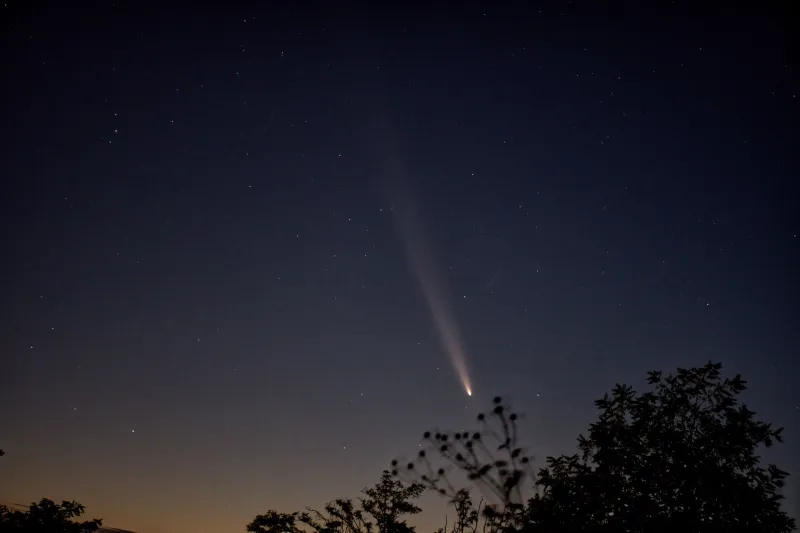
Every year has a handful of ISS passes that could genuinely stop you in your tracks. We're talking magnitude -3.5 or better, near-overhead trajectories, crystal-clear twilight skies. The kind of pass where the station blazes across from horizon to horizon in under six minutes and leaves you wondering how anyone could possibly miss it.
And yet—most people do.
Not because they don't care. Because life gets in the way, notifications get buried, and the window between "perfect conditions" and "the ISS is already gone" is brutally short. So let's take an honest look at what this year has already offered, where things went sideways, and how you can set yourself up to actually catch the good stuff from here on out.
What the First Half of the Year Actually Delivered
January and February are tricky months for ISS watching in the US. Shorter windows of astronomical twilight, lower elevation passes for most of the lower 48, and—let's be real—temperatures that make standing outside for six minutes feel like a personal punishment. Still, there were legitimate opportunities scattered through those months, particularly for observers in the Southeast and Southern California who got longer visibility arcs and more comfortable conditions.
March typically marks a turning point. As Earth's axial tilt begins shifting in our favor, passes start climbing higher in the sky for mid-latitude observers. Some of the year's cleanest geometry shows up in late March and April, when the ISS can appear in the southwest after sunset and exit toward the northeast—a full diagonal sweep across the sky. If you're in the Midwest or Mid-Atlantic states, spring passes often hit elevation angles above 60 degrees, which puts the station nearly overhead and maximizes brightness.
April and May tend to deliver what experienced watchers call "marathon windows"—stretches of consecutive evenings where the ISS is visible at roughly the same time each night. These happen when the station's orbital plane aligns favorably with your location and the sun angle keeps the ISS illuminated even after your sky has darkened. Miss night one, and you've still got five or six more chances. Miss the whole window, and you're waiting weeks for the next one.
Where Things Went Wrong for Most Observers
Here's the honest breakdown of why people missed the good passes this year:
Notification lag. Most tracking apps send alerts 30 to 60 minutes before a pass. That sounds like plenty of time. It isn't, once you factor in actually getting outside, letting your eyes adjust, and figuring out which part of the sky to watch. A heads-up the night before is far more useful than a push notification while you're in the middle of dinner.
Cloud cover optimism. Partly cloudy does not mean "probably fine." If there's a 40% cloud cover forecast and the pass lasts five minutes, there's a solid chance a cloud drifts through the exact slice of sky you need to watch. Observers who got burned by this in March and April—when spring weather is notoriously unpredictable—often gave up checking for a while afterward. That's understandable, but it's also how you miss the clear-night passes that follow.
Not knowing what "good" looks like. A pass at 15 degrees elevation that lasts two minutes isn't worth rearranging your evening. A pass at 72 degrees elevation that lasts five and a half minutes absolutely is. Without a basic sense of how to read pass quality data, every notification looks the same.
Reading Pass Data Like You Mean It
When you pull up a pass prediction—whether through NASA's Spot the Station, Heavens-Above, or a dedicated tracking app—you're looking at a few key numbers. Maximum elevation tells you how high the ISS will get above your horizon (higher is better, anything above 40 degrees is solid). Duration tells you how long the pass lasts. Magnitude gives you brightness on a scale where lower numbers mean brighter—negative magnitudes are exceptional.
A pass rated at magnitude -3.5 with a max elevation of 80 degrees is a calendar event. A pass at magnitude -0.5 at 18 degrees is a curiosity at best. Learning to filter your notifications by these values changes everything.
Building a System That Actually Works
The observers who consistently catch good passes aren't luckier than everyone else. They've just built lightweight habits that keep them informed without requiring constant attention.
Start by checking your local predictions once a week—Sunday evening works well for planning the week ahead. Flag any passes rated above magnitude -2 with a max elevation above 45 degrees. Put them in your calendar with a 24-hour reminder and a second reminder 45 minutes before. That two-alert system gives you planning time and a final "get outside" nudge.
For cloud cover, use a dedicated astronomy weather tool rather than a general forecast. Apps like Clear Outside or the Clear Dark Sky chart give you hourly cloud opacity predictions specifically tuned for sky observation. Check the night before and again two hours before the pass.
If you live somewhere with genuinely unpredictable weather—the Great Lakes region, the Pacific Northwest, anywhere in the South during storm season—build in backup passes. When a good pass is coming up, identify the next two or three that are nearly as good. If the first one gets clouded out, you're not starting over from scratch.
What's Still Coming This Year
The good news: you haven't missed the best of it. Late summer and fall bring some of the year's most reliable viewing conditions across much of the US. Evening passes in August and September regularly hit high elevation angles for observers from the Rockies to the East Coast, and atmospheric stability tends to improve as summer humidity fades.
The ISS isn't going anywhere. It's up there completing about 16 orbits a day, passing over your location multiple times in each 24-hour cycle. The question is never whether it'll show up—it's whether you'll be ready when it does.
This time, you will be.