When the App Says 'Go' But the Sky Says 'Meh': Decoding the ISS Viewing Gap
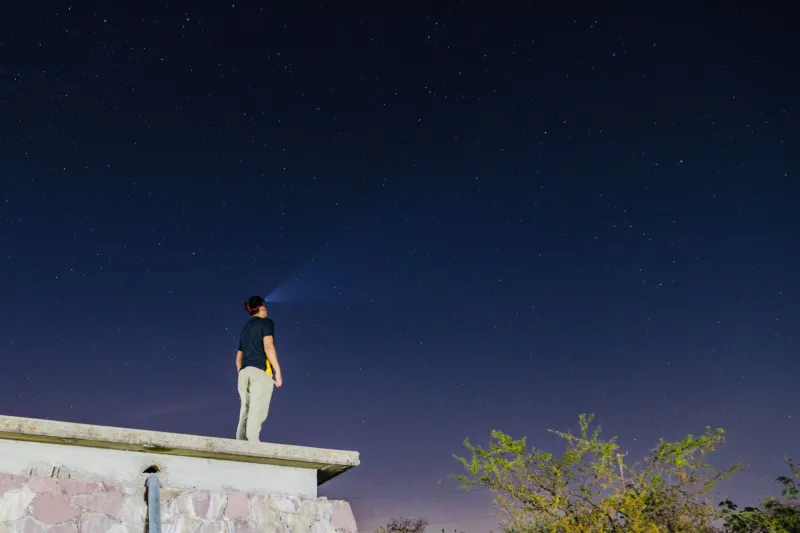
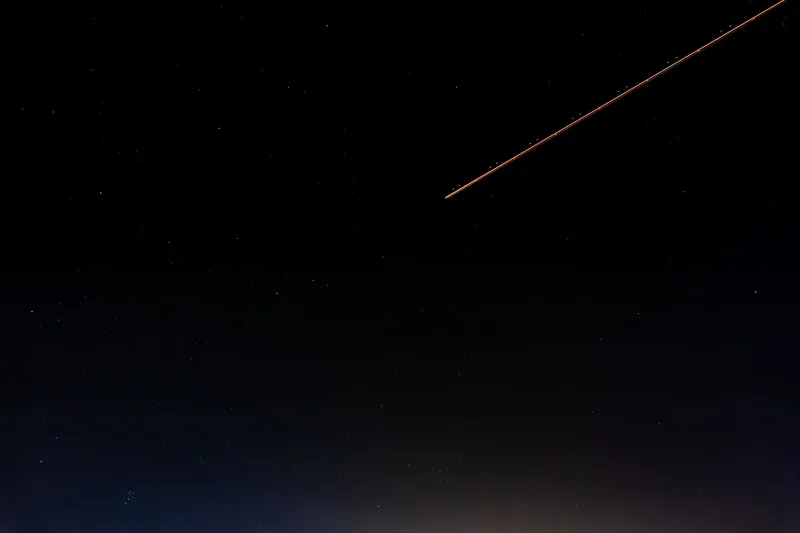
You did everything right. You checked the app, set the alert, stepped outside at exactly the right moment, and scanned the southwestern sky like a hawk. The ISS showed up on schedule — a moving point of light sliding across the darkness — and your honest reaction was somewhere between "huh" and "that's it?"
Don't blame yourself. And don't blame the app, either, at least not entirely. The disconnect between a predicted "perfect pass" and a genuinely spectacular one comes down to a stack of variables that no algorithm, no matter how sophisticated, can fully account for in advance. Understanding that gap doesn't make the ISS any less real — it actually makes you a smarter observer.
What Tracking Apps Are Actually Doing
Apps like Heavens-Above, Spot the Station, and ISS Detector are doing something genuinely impressive: they're calculating the orbital position of a football-field-sized object moving at roughly 17,500 miles per hour, predicting where it will appear in your local sky down to the minute and degree. That's not trivial.
But here's what they're working with. These tools use a combination of Two-Line Element sets (TLE data, essentially a snapshot of the ISS's orbital parameters), your GPS coordinates, and a model of Earth's atmosphere to predict the station's apparent brightness — its magnitude — and its trajectory overhead.
The magnitude prediction, specifically, is where things get slippery. Apps calculate an expected brightness based on the station's size, its angle relative to the sun, and a standardized atmospheric model. That model assumes average conditions. Your sky on Tuesday night in suburban Ohio in mid-October is not average. It's specific, and specific is exactly what the algorithm can't see.
The Atmosphere Is Not a Window — It's a Filter
Even on a night that looks clear to you standing in your backyard, the atmosphere above you is doing a lot of work. Water vapor, fine particulates, aerosols from distant wildfires, industrial haze, and even pollen can scatter and absorb light before it reaches your eyes. Astronomers call this atmospheric extinction, and it gets significantly worse the lower an object sits above the horizon.
This matters enormously for ISS passes. A pass that peaks at 80 degrees elevation — nearly straight overhead — travels through a relatively thin slice of atmosphere. A pass that only reaches 25 or 30 degrees elevation has to punch through a much thicker atmospheric column to reach you. Apps will still flag that lower pass as "visible," but you might find it noticeably dimmer and harder to track than the numbers suggested.
A useful rule of thumb: treat any pass peaking below 35 degrees with mild skepticism, especially if you live in a humid region or near an agricultural area. The Great Plains and the South in summer, for instance, often carry enough atmospheric moisture to knock a predicted magnitude down by half a step or more.
Light Pollution Isn't Static — It Breathes
Your tracking app knows your zip code. It does not know that your neighbor just turned on their floodlights, that there's a high school football game two miles away with the stadium blazing, or that a thin layer of marine fog is sitting at 2,000 feet and scattering every photon upward.
Light pollution maps — the kind that inform app predictions — are based on average measured sky brightness. They don't update in real time. A Friday night in most American suburbs is meaningfully brighter than a Tuesday night at 2 a.m., and neither the app nor the map knows the difference.
This is one reason experienced observers keep a mental log of their specific location's quirks. Maybe your western sky is always washed out because of a shopping center. Maybe the northeast quadrant is your cleanest view. That kind of hyperlocal knowledge takes time to build, and no app can give it to you.
The Psychology of the Predicted Spectacular
Here's the part nobody really talks about: expectation is doing a lot of heavy lifting in these disappointments.
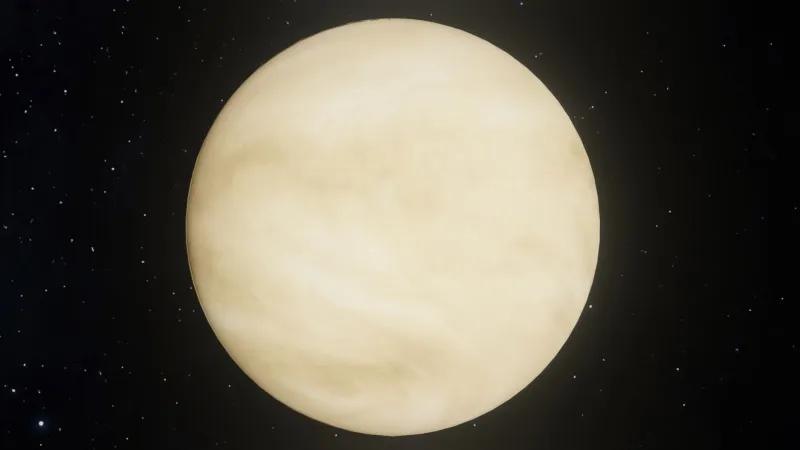
When an app tells you a pass will reach magnitude -3.5 — brighter than Venus, brighter than almost anything else in the night sky — your brain builds a mental image. You're expecting something jaw-dropping. What you get is a fast-moving star-like point of light. It might genuinely be stunning by any objective measure. But because you were primed for "wow," you experience something closer to "oh."
This isn't a flaw in your perception. It's just how human expectation works. Studies in perceptual psychology consistently show that predicted experiences are evaluated against their anticipation, not against some neutral baseline. The same ISS pass, seen unexpectedly by someone who didn't know what they were looking at, often produces genuine amazement.
One practical fix: try watching a pass without reading the predicted magnitude first. Just know the time and general direction, and let the experience land on its own terms. You might be surprised how differently it feels.
When Conditions Are Genuinely Bad (And How to Tell)
Sometimes the disappointment isn't psychological — the conditions really were poor. Here's how to distinguish between "this was always going to be underwhelming" and "the app was right but the sky let us down."
Check the transparency, not just the cloud cover. Clear Sky Chart (cleardarksky.com) and similar resources give you an atmospheric transparency rating separate from cloud forecasts. A cloudless sky can still have terrible transparency due to humidity and haze.
Watch a known bright star first. Before an ISS pass, look at a familiar bright star — Sirius, Vega, Arcturus, depending on the season. If it's twinkling heavily or looks dimmer than usual, your atmosphere is turbulent or hazy. Adjust your expectations accordingly.
Note the horizon glow. If you can see a distinct orange or white dome of light pollution pushing up from the horizon in any direction, passes that travel through that region of sky will be impacted.
Give your eyes time. Full dark adaptation takes 20 to 30 minutes. If you walked out of a bright room two minutes before the pass, your eyes are still adjusting. What felt dim might have been genuinely bright — your visual system just wasn't ready.
Recalibrating Your Expectations Without Losing the Wonder
The goal here isn't to become cynical about ISS tracking. It's to become accurate. An observer who understands why a predicted -3.0 magnitude pass looked more like a -1.5 to their eyes isn't disappointed — they're informed. That understanding turns every pass into a data point, a small experiment, a chance to refine your knowledge of your own local sky.
The ISS is still up there, circling the planet every 90 minutes, carrying a crew of humans doing science in microgravity. When it crosses your sky, even on a hazy night when it looks a little less brilliant than advertised, that's still a genuinely remarkable thing to witness.
The app gets you outside. What happens next is between you and the atmosphere.