When the ISS Wins the Night — and Everything Else Loses
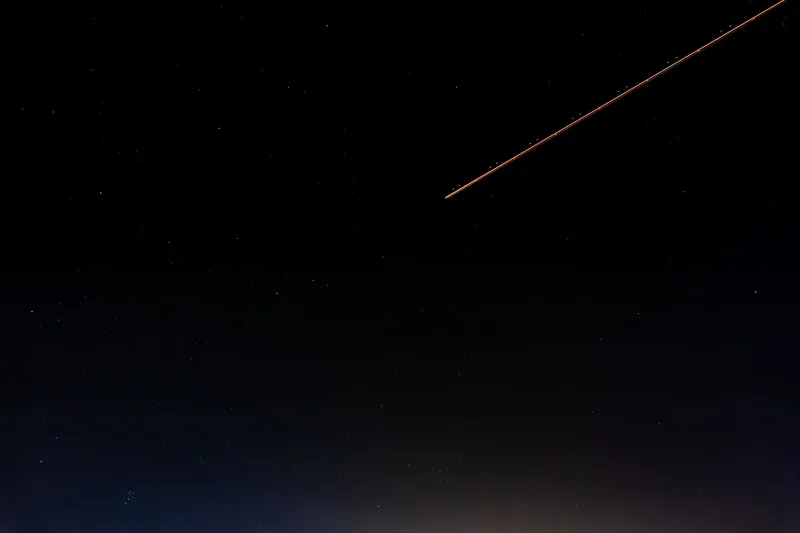
There's a particular kind of frustration that only serious sky watchers understand. You've checked your tracking app, the forecast looks clean, and the ISS is lined up for a brilliant, high-arc pass right over your backyard. You drag out the lawn chair, set a timer, and settle in. Then you remember: tonight is also the peak of the Perseids. Or Jupiter is sitting in its closest approach in years. Or there's a lunar occultation of a bright star that won't repeat until your kids are in high school.
Suddenly your perfect night has a conflict. Welcome to what we call the ISS Window Paradox.
The Geometry That Creates the Problem
The ISS orbits Earth roughly every 90 minutes, but the passes visible from any given location are clustered into windows — usually a stretch of consecutive evenings or mornings when the geometry of the Sun, Earth, and station align to put the ISS in sunlight while your sky is dark. These windows typically last one to two weeks, then go quiet for a similar stretch as the station dips into Earth's shadow during your local nighttime.
Here's where it gets complicated. Those same geometry-driven windows are often tied to the same time of year, season after season. And so are a lot of other celestial events. Meteor showers, for instance, hit on fixed calendar dates — the Perseids peak every mid-August, the Leonids every mid-November, the Geminids every mid-December. Planetary oppositions and conjunctions follow their own orbital rhythms. The result is a sky calendar that sometimes stacks events on top of each other with no concern for your scheduling preferences.
The Meteor Shower Problem
Meteor showers are probably the most common source of conflict. During a strong ISS visibility window, a pass can last anywhere from two to six minutes — but that's two to six minutes when you're locked onto a moving target, tracking it across the sky, maybe photographing it. Meteor watching is almost the opposite discipline: you want to go wide, relax your gaze, and let the sky come to you. Trying to do both at once is like watching a tennis match while also trying to catch flies.
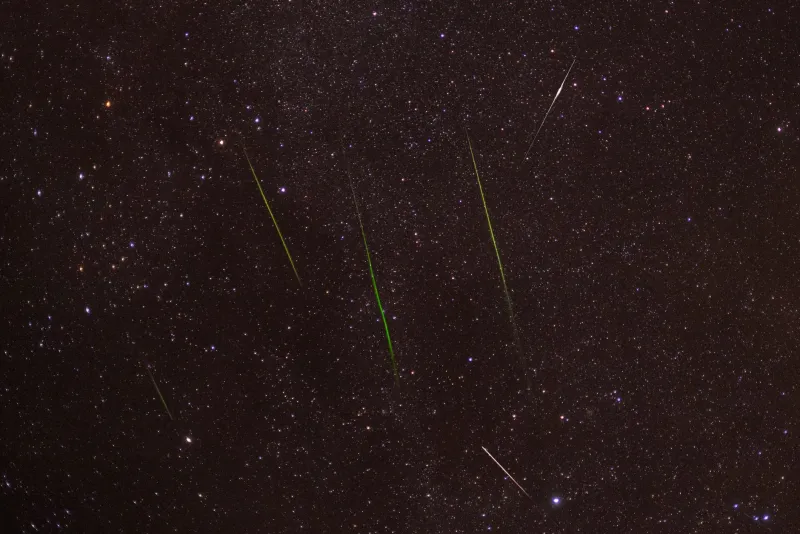
During the 2023 Perseid peak, observers in the continental US faced exactly this situation. A strong ISS visibility window overlapped with the shower's peak nights, and the choice was stark: chase the station's bright streak on a precise schedule, or sprawl out and rake in shooting stars. Some watchers tried to split the difference, catching the ISS pass early in the evening and then switching to meteor mode. It worked — sometimes. But it also meant constantly checking phones, breaking the dark adaptation that makes faint meteors visible, and generally splitting your attention in ways that made both experiences less satisfying.
Planetary Alignments and the Timing Trap
Planetary events create a different kind of tension. A Jupiter opposition, a Saturn ring-plane crossing, or a tight conjunction between Venus and Mars are slow-moving spectacles — they're best over multiple nights, not a single session. The ISS, by contrast, is a creature of the moment. Miss your 6-minute window and you're waiting for the next orbit.
The trap is that planetary events feel patient and forgiving, so observers tend to deprioritize them in favor of the ISS's urgency. But that patience is partly an illusion. The best night to see Jupiter at opposition is opposition night, not two weeks later when it's slightly past peak. Conjunctions are tightest on one specific evening. Treat planetary events as infinitely reschedulable and you'll find yourself saying "I'll catch it tomorrow" until the window closes entirely.
How to Actually Prioritize When Conflicts Hit
There's no universal answer, but there are some practical frameworks that help.
Rarity wins. If one event is genuinely uncommon — a transit, an occultation, a close conjunction that won't repeat for years — that should almost always take priority over an ISS pass. The station will be up there making passes for years to come. Some celestial arrangements are legitimately once-in-a-lifetime.
Check the ISS pass quality, not just the existence of a pass. Not all passes are equal. A low, 10-degree horizon scrape is barely worth your time. A high-arc pass reaching 60 or 70 degrees elevation, hitting magnitude -3 or brighter, is a different story. If the competing event is strong and your ISS pass is marginal, the choice is easy.
Split the night by time, not attention. This works better than trying to multitask. If the ISS passes at 9:14 PM and your meteor shower peaks after midnight, you're not really choosing — you can do both. The conflict is most painful when events want the same hour of sky time.
Lean into the season's strengths. Summer evenings favor ISS visibility in the northern US because of favorable sun angles, but they also bring the Perseids and often good planetary positions. Winter passes tend to be shorter and lower. Knowing which season is naturally richer helps you calibrate expectations before conflicts even arise.
The Upside of the Paradox
Here's the thing nobody talks about: the overlap isn't always a problem. Sometimes having the ISS cross during a meteor shower is genuinely spectacular. If you're already outside watching for Perseids and the station arcs overhead, you get a bonus bright streak that makes the night feel electric. The conflict only stings when you're trying to photograph or precisely time both events simultaneously.
There's also something instructive about the paradox itself. It forces you to think carefully about what you actually want from a night under the sky. Are you there to track a specific object? To soak in the atmosphere? To capture images? To share the experience with someone who's never seen the ISS? Your answer changes which conflict resolution strategy makes sense.
Building a Sky Calendar That Accounts for Conflict
The most effective thing you can do is plan at the month level, not the night level. Pull up a meteor shower calendar alongside your ISS tracking app and mark the overlap zones in advance. Sites like Heavens-Above and Stellarium can give you pass predictions weeks out. Cross-reference them with opposition dates for the outer planets, scheduled conjunctions, and any notable lunar events.
When you see a three-way collision coming — say, a meteor peak, a bright ISS window, and a close planetary pairing all in the same week — you can pre-decide your priorities rather than scrambling in the dark. That advance thinking is what separates casual sky watchers from people who actually get the most out of their clear nights.
The ISS will keep orbiting. The sky will keep offering up its calendar of wonders. Your job is just to show up with a plan — and maybe a backup plan for when the cosmos decides to schedule everything at once.