Backyard Telescopes, Big Data: How Amateur Observers Are Quietly Advancing Space Station Science
Somewhere in suburban Phoenix, a retired schoolteacher named Dennis has been photographing the International Space Station from his backyard for three years. He's not affiliated with NASA. He doesn't have a research grant. What he does have is a motorized tracking mount, a decent mirrorless camera, and a spreadsheet full of brightness readings that a graduate student at the University of Arizona once emailed him about — completely out of the blue.
Dennis isn't an anomaly. He's part of a quiet revolution in how space science gets done.
The Democratization of the Orbital View
For most of the ISS's operational history, meaningful data about the station came from one direction: down. NASA, Roscosmos, and partner agencies controlled the flow of information. What the public saw was curated — beautiful photos from astronauts, scheduled press releases, approved livestreams.
That started changing when affordable tracking software met consumer-grade optics. Suddenly, thousands of observers across the country had the tools to do something genuinely useful: watch the station systematically, record what they saw, and share it.
Platforms like Heavens-Above and Stellarium gave people accurate pass predictions. Apps made real-time tracking accessible on a phone. And communities on forums and social media turned isolated hobbyists into loose, distributed networks of observers — essentially a ground-based sensor array assembled from lawn chairs and enthusiasm.
What Citizen Observers Actually Catch
So what can a backyard astronomer actually contribute? More than you might expect.
Reflectivity changes. The ISS doesn't shine with a constant brightness. Its solar panels and radiators rotate, its attitude shifts, and hardware accumulates micrometeorite pitting over time. Amateur observers who photograph the station regularly can detect changes in how it reflects sunlight — variations that sometimes hint at structural or operational changes before any official announcement. A cluster of observers in the Pacific Northwest independently noted a subtle but consistent dimming in early passes one season, which later correlated with a solar array reconfiguration that NASA confirmed weeks afterward.
Flare documentation. Certain geometries cause the station to produce dramatic brightness spikes — brief, intense flares as sunlight catches a flat surface at just the right angle. These events are predictable in theory but messy in practice, and logged observations help refine the models that predict them. Citizen data has been used to cross-check orbital mechanics software used by tracking services.
Orbital decay patterns. The ISS gradually loses altitude due to atmospheric drag and must be periodically reboosted. The timing and magnitude of these reBoost maneuvers affect pass predictions. Observers who notice that their tracking app's predictions are consistently off — and who log those discrepancies carefully — are effectively documenting real-time orbital drift. Projects like the Satellite Observers mailing list have collected this kind of data for decades.
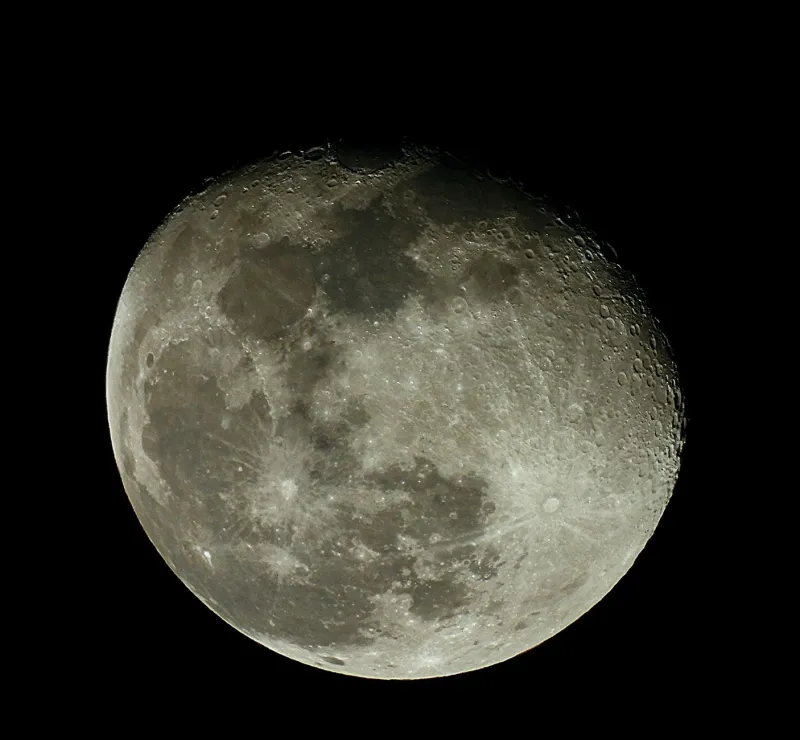
Transit documentation. When the ISS crosses in front of the sun or moon, the transit lasts only a fraction of a second and is visible from a narrow strip of ground. Coordinating multiple observers along a predicted path and comparing their footage helps scientists precisely pin down the station's position and size — useful for calibrating tracking systems.
The Tools That Made It Possible
None of this would work without accessible infrastructure. A few key developments unlocked citizen science at scale.
First, pass prediction algorithms became freely available and accurate enough that even beginners could reliably be in the right spot at the right time. Second, smartphone cameras improved to the point where a determined observer with a $300 phone and a $150 tracking app could capture transit imagery that would have required professional equipment a decade ago. Third — and maybe most importantly — the internet gave isolated observers a way to aggregate their data.
Sites like Spot the Station (NASA's own platform) encourage basic sighting reports. But more sophisticated citizen science happens through organizations like the American Association of Variable Star Observers (AAVSO), which has expanded its mission beyond stars to include satellite photometry, and through the European-based but globally active SeeSat-L community, which counts hundreds of American contributors.
When Amateur Data Catches Professional Attention
The story of citizen science catching professional attention isn't always dramatic. It rarely involves a single eureka moment. More often, it's a pattern — dozens of observers flagging the same anomaly over weeks until someone in a university office takes notice.
But there are standout examples. A group of amateur satellite trackers in the US and Europe independently identified what appeared to be an unannounced object released from the ISS in 2014, prompting questions about undisclosed experiments. NASA eventually confirmed a small satellite deployment that hadn't been publicized in advance. The amateurs found it first.
More recently, crowdsourced brightness data helped researchers studying the ISS's long-term photometric behavior build a dataset that simply didn't exist in any official archive. The station has been continuously occupied since 2000, but systematic brightness logging from the ground? That largely comes from hobbyists.
How to Get Involved Right Now
If you want to contribute something real — not just watch, but actually add to the scientific record — here's where to start.
Log your sightings. Even basic naked-eye observations have value when they're consistent and well-documented. Note the time, your location, the estimated brightness, and any deviations from predicted behavior. NASA's Spot the Station platform accepts reports, and the data genuinely gets used.
Join a network. The SeeSat-L mailing list is old-school but active. Citizen science platforms like SciStarter list satellite-related projects that need contributors. The more you connect with other observers, the more your individual data points become part of something larger.
Learn basic photometry. You don't need a degree — just a consistent setup and a willingness to follow a methodology. Several online guides walk through how to calibrate your camera and compare ISS brightness against known reference stars.
And keep going out. The most valuable thing about citizen science isn't any single observation — it's the cumulative record. Dennis in Phoenix matters not because of one great photo, but because he has three years of them.
The ISS will be up there tonight. The question is whether anyone's watching carefully enough to notice something new.