Why the ISS Seems to Disappear for Weeks—and Exactly When It'll Come Back
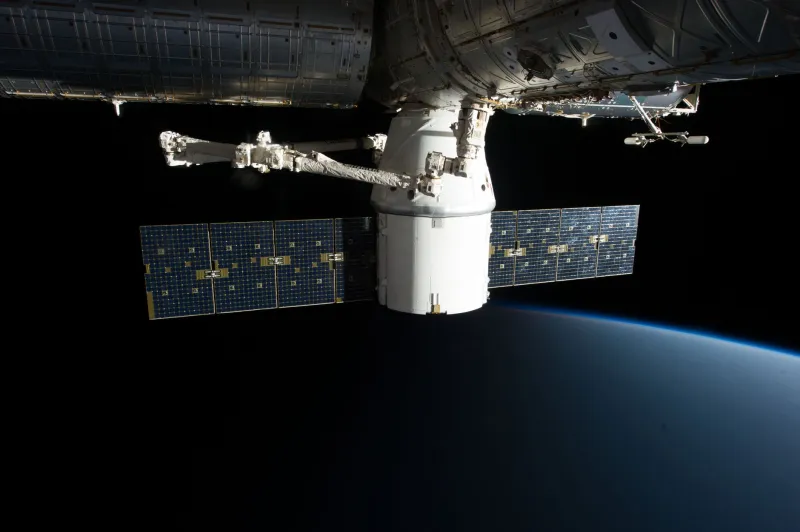
There's a frustrating experience that almost every ISS watcher has eventually: you catch a few great passes in a row, you're feeling good about your tracking routine, and then—nothing. Night after night, the apps show no visible passes for your location. The station is still up there, obviously, still flying 250 miles overhead, still completing 16 orbits a day. So where did it go?
It didn't go anywhere. Your geometry did.
Understanding why ISS visibility clusters in some seasons and drops to nearly zero in others is one of the more genuinely satisfying pieces of orbital mechanics you can learn as a sky watcher. And the payoff is practical: once you understand the pattern, you can predict your next good viewing window months before it arrives.
The Geometry Problem at the Heart of Visibility
The ISS is only visible to the naked eye when three conditions are true simultaneously: it's above your local horizon, your sky is dark enough to see it, and sunlight is still hitting the station while your location is in shadow.
That third condition is the one most people don't think about. The ISS has no lights of its own that you'd see from the ground. What you're seeing when it passes overhead is reflected sunlight off its solar panels and aluminum structure. For that to happen, the station needs to be in direct sunlight while you're standing in Earth's shadow—essentially, during the twilight hours just after sunset or just before sunrise.
The window where this geometry works is called the "illuminated pass window," and its width varies dramatically depending on the time of year and your latitude. In summer at northern latitudes, this window can be enormous. In winter, it can shrink to almost nothing.
Why Summer Is Peak Season for Northern States
During summer in the US, the sun sets late and rises early. More importantly, even after sunset, the sun is only a few degrees below your horizon for much of the night. That means the ISS, orbiting at 250 miles altitude, can remain in sunlight for hours after your local sky has darkened—giving you long stretches of potential visibility across multiple passes per night.
For observers in the northern tier of the US—Minnesota, Michigan, Maine, Montana—summer solstice conditions can produce passes as late as 1 or 2 a.m. that are still fully illuminated. These "summer marathon" periods, as experienced watchers call them, can deliver five or six visible passes in a single night. Some of those passes will be dim and low-angle, but several will be genuinely spectacular.
The ISS's orbital inclination of 51.6 degrees is specifically chosen to allow it to fly over the widest possible range of Earth's surface, including most populated areas of the US, Europe, and Russia. From the lower 48 states, this means the station passes overhead at a variety of angles and elevations throughout each orbital cycle.
The Winter Drought and Why Southern Observers Feel It Less
Flip the calendar to December and January, and the geometry reverses for northern observers. The sun sets early and rises late, but more critically, it drops deep below your horizon quickly. By the time the sky is fully dark, the ISS has often entered Earth's shadow itself—meaning it's not illuminated and therefore invisible even when it's directly overhead.
This is why observers in the northern states can go two to four weeks in midwinter without a single naked-eye ISS pass. The station is still passing over. You just can't see it.
Observers in Florida, Texas, and the Southwest have a meaningful advantage here. Their lower latitude means the sun doesn't drop as steeply below their horizon in winter, which keeps the illuminated pass window open longer into the evening. A January night in Miami might offer one solid visible pass while Minneapolis gets none. By February, as the sun starts climbing again, northern observers gradually return to the fold.
The Orbital Period and the 72-Day Drift Cycle
Layered on top of the seasonal pattern is a shorter cycle driven by the relationship between the ISS's orbital period and Earth's rotation. The station completes an orbit every 92 minutes, and Earth rotates beneath it continuously. This means the ISS's ground track shifts westward by about 22.5 degrees on each successive pass.
Over roughly 72 days, this drift causes the station's passes to cycle through all local times—morning, afternoon, evening, and middle of the night. For any given location, this creates roughly three-week windows of favorable evening passes, followed by similar windows of favorable morning passes, with gaps in between when passes are happening during local daytime and therefore invisible.
These 72-day cycles interact with the seasonal illumination patterns to create the actual viewing calendar you experience. A favorable orbital geometry in summer is amplified by the long illumination window. The same geometry in winter is suppressed by the short one.
How to Actually Predict Your Next Good Window
You don't need to do orbital calculations yourself. What you need is a basic understanding of the pattern combined with a reliable prediction tool.
Heavens-Above.com lets you generate a 10-day pass table for your specific location, with magnitude and elevation data for each pass. Check it at the start of each month. If you see a cluster of high-magnitude, high-elevation passes starting in the next week or two, you're entering a good window. If the table shows nothing above magnitude -1 for the full 10 days, you're in a gap—and you can check back in two weeks.
For planning further ahead, NASA's Spot the Station and apps like ISS Detector let you set alerts filtered by minimum elevation and magnitude. Configure those filters to only notify you about genuinely good passes (magnitude -2 or better, elevation 40 degrees or above), and you'll stop getting pinged about mediocre opportunities while never missing the real ones.
The ISS isn't random. Its comings and goings follow patterns that have been understood since the station first reached orbit in 1998. The sky overhead is a predictable place—you just need the right framework to read it.