Brighter Than Venus: The Science Behind the ISS's Most Dazzling Passes
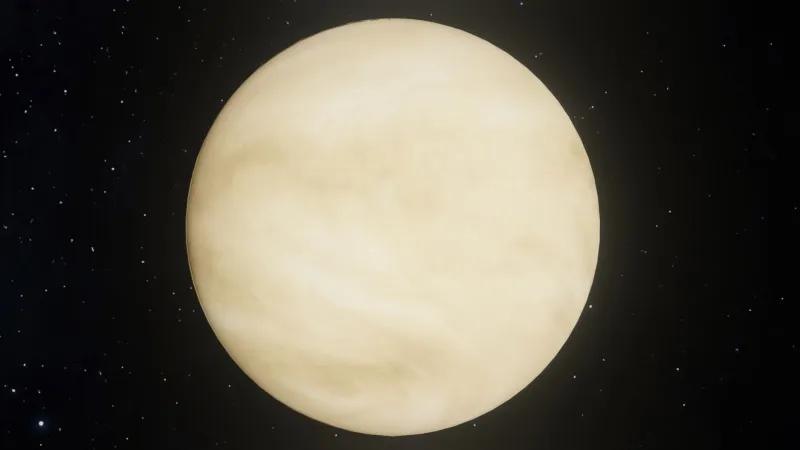
Most nights, the ISS is already a pretty solid show. A steady, fast-moving light cruising across the sky — no blinking, no engine noise, just a silent streak of reflected sunlight. But every now and then, something different happens. The station doesn't just pass overhead. It blazes. We're talking brighter than Sirius, brighter than Jupiter, and yes — brighter than Venus, the planet that's spent millennia being called the brightest object in the night sky after the Moon.
These aren't flukes. They're geometry. And once you understand what's actually happening up there, you'll never look at a tracking app the same way again.
What Makes the ISS Visible at All
The ISS doesn't produce its own light. It's not a star, it's not on fire, and it's definitely not lit up with floodlights for your viewing pleasure. What you're seeing is sunlight — the same light hitting your face on a summer afternoon — bouncing off the station's enormous solar panel arrays and reflecting down toward Earth's surface.
Those solar arrays span about 240 feet tip to tip, which is wider than a football field. They're also coated in highly reflective materials designed to convert as much sunlight into electricity as possible. As a side effect, they're incredibly good mirrors. When the angle is right, they send a concentrated beam of reflected sunlight almost directly at your location on the ground.
That angle is everything.
The Magic Number: Magnitude -6
Astronomers measure brightness using a scale called apparent magnitude. The lower the number, the brighter the object. The full Moon sits around -12.7. Venus, on its best nights, hits about -4.9. A typical ISS pass comes in somewhere between -1 and -3, which is already impressive — brighter than any star in the sky.
But during a superbright pass, the ISS can push toward -6. That's not just a little brighter than Venus. That's nearly four times brighter in terms of what your eye actually perceives. Under the right conditions, you can sometimes see the ISS in broad daylight. You can cast a faint shadow at night. It can briefly wash out nearby stars the way a car's high beams wash out everything else on a dark road.
These moments don't last long. We're usually talking a few seconds to maybe a minute of peak brilliance. But they're unforgettable if you're outside watching.
The Three Conditions That Create a Superbright Pass
For the ISS to reach these extreme brightness levels, three things need to line up almost perfectly.
First, the pass needs to happen during twilight. The ISS is only visible when it's in sunlight and you're in darkness — or close to it. Passes that happen in deep night tend to be dimmer because the geometry rarely lines up for maximum reflection. The sweet spot is roughly 30 to 90 minutes after sunset or before sunrise, when the sky is dark enough to contrast against the station's glow, but the sun's angle still illuminates the station from below the horizon.
Second, the station's solar arrays need to be angled toward you. The ISS constantly adjusts its solar panels to track the sun and maximize power generation. Occasionally, during a pass, the panels rotate into a position where they act like a giant mirror aimed almost directly at your spot on Earth. This is the key variable — and it's also the hardest to predict precisely, because panel orientation changes based on crew activity, power demands, and orbital adjustments.
Third, the pass needs to be high in your sky. A pass that skims the horizon loses brightness fast, partly because you're looking through more of Earth's atmosphere, and partly because the geometry of reflection is less favorable. Passes that peak at 60 degrees or higher above the horizon — closer to directly overhead — give the reflected light a shorter, cleaner path to your eyes.
When all three conditions overlap, you get a superbright pass.
How to Find These Events Before They Happen
Here's the good news: these passes are predictable, at least partially. Tracking tools like NASA's Spot the Station, Heavens-Above, and several mobile apps will give you magnitude estimates for upcoming ISS passes at your specific location. Any pass with a predicted magnitude of -3 or better is worth stepping outside for. A predicted -5 or -6 is a genuine event — put it in your calendar.
The caveat is that peak brightness during a pass can vary from predictions, especially when solar panel orientation is a factor. Think of the magnitude estimate as a well-educated forecast, not a guarantee. The actual peak might be a little dimmer, or it might briefly exceed the prediction if the angles align just right.
For US observers, the ISS visibility window shifts throughout the year based on your latitude. Folks in the Pacific Northwest and New England often get excellent high-elevation passes during spring and fall. Observers in the South and Southwest tend to see more frequent passes but sometimes at lower angles. Check your local predictions weekly — a great pass might be coming up in the next few days.
Photographing the Moment
Capturing a superbright pass on camera is absolutely doable, even with a smartphone. The key is preparation.
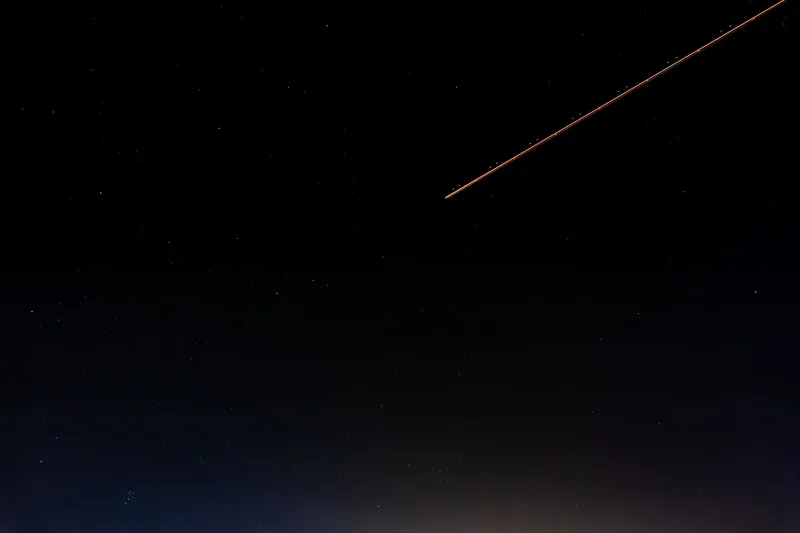
Set up before the pass begins. Find a spot with a clear view in the direction the ISS will rise, then track it across the sky. For smartphones, use a slow-motion video mode or a long-exposure app to capture the station's trail. For DSLR users, a 10-to-30-second exposure at ISO 800–1600 with a wide-angle lens will pull in the streak beautifully — and if the pass is bright enough, the trail will noticeably thicken or brighten at its peak.
One underrated tip: include a foreground element. A tree line, a rooftop, a silhouetted barn — something that grounds the image and turns a line of light into a photograph that tells a story.
Why It Still Surprises People
Even experienced skywatchers get caught off guard by a truly bright ISS pass. There's something viscerally strange about watching a human-made object outshine the planets. Venus has been the undisputed queen of the pre-dawn sky for as long as humans have been looking up. The idea that a 450-ton research station assembled piece by piece in low Earth orbit can briefly steal that title is genuinely wild.
But that's the ISS. It's not just a satellite — it's the largest structure humanity has ever put in space, and on the right night, from the right backyard, it makes sure you know it.
Check your tracking app tonight. You might be closer to one of these passes than you think.