Your Tracking App Is Telling the Truth — Just Not the Whole Story: ISS Orbital Maneuvers Explained
Space station tracking apps are genuinely impressive pieces of software. They pull orbital element data, crunch the math in real time, and tell you almost exactly where to look and when. For the vast majority of passes, they're right. But every experienced ISS watcher has a story about the night the app was wrong — or more precisely, the night the station moved and the app didn't know yet.
Understanding why that happens requires a quick look at what's actually going on behind the scenes at mission operations, and why the ISS doesn't just stay put in a tidy, predictable orbit.
The Orbit Is Always Decaying. Always.
Low Earth orbit sounds stable, but it isn't — not really. Even at 250 miles up, there's enough residual atmosphere to create drag on the station. That drag is tiny on any given orbit, but it compounds continuously. Left unaddressed, the ISS would gradually spiral downward and eventually reenter the atmosphere.
To counteract this, mission controllers periodically perform what are called reboost maneuvers — essentially firing thrusters to push the station back up to a higher altitude. These burns are planned well in advance and coordinated carefully around crew activities, docking schedules, and visiting vehicle arrivals. They're routine. They're also invisible to most tracking apps until after the fact.
When a reboost happens, the station's orbital parameters change. The altitude shifts, the period of each orbit changes slightly, and the ground track — the path the station traces over Earth's surface — adjusts accordingly. A pass that was going to arc high over Chicago at 9:47 PM might now clip the southern horizon at 9:52, or miss the area entirely.
How Tracking Data Actually Works
Most tracking apps, including the popular ones on your phone, pull their data from a source called Two-Line Element sets, or TLEs. These are standardized strings of orbital parameters published by the US Space Surveillance Network and distributed publicly through sources like Space-Track.org and Celestrak.
TLEs are updated regularly — sometimes multiple times per day for the ISS — but there's always a lag between when a maneuver happens and when fresh, accurate elements are published and propagated to the apps you're using. During that window, predictions can be off by minutes or degrees, which in ISS observation terms is significant.
The apps aren't broken. The data pipeline just has real-world latency built into it. Knowing this changes how you use these tools.
The Maneuvers That Matter Most to Observers
Not all orbital operations affect ground visibility equally. Here's what to watch for:
Routine reboosts happen roughly monthly and are the most common source of prediction drift. They're usually modest altitude adjustments — a few kilometers — but they shift the ground track enough to meaningfully change who sees what.
Debris avoidance maneuvers are less predictable and sometimes executed on short notice. When a piece of tracked debris is calculated to come uncomfortably close to the station, controllers may perform a burn with as little as a few hours of warning. These are the events most likely to catch observers completely off guard.
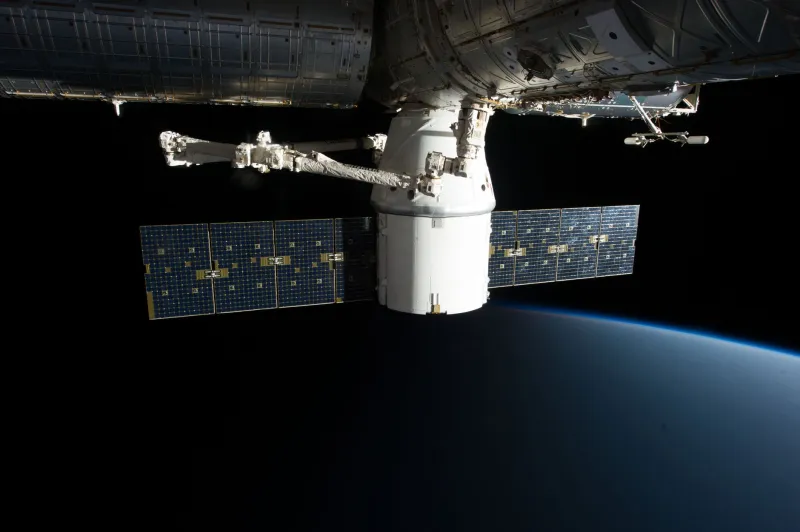
Docking and undocking burns from visiting vehicles — Crew Dragon capsules, Cygnus cargo ships, Soyuz — can also slightly alter the station's trajectory. These are published in advance and usually make the spaceflight news cycle, which gives attentive observers a heads-up.
Attitude adjustments change the station's orientation but not its orbital path. These don't affect pass timing, but they can affect the station's brightness during a pass, since the angle of solar panel reflection toward your location changes.
Where to Find the Information Before It Hits Your App
If you want to stay ahead of the tracking apps, you need to go closer to the source. Here are the best places to look:
NASA's ISS On-Orbit Status Reports are published on NASA's website and include information about planned maneuvers, visiting vehicle schedules, and maintenance activities. They're written for a technical audience but readable with some patience.
NASA's Blogs and Spaceflight News Sites like NASASpaceflight.com cover planned docking and departure events in detail, usually days in advance. These events often come with associated maneuvers that affect the orbit.
Space-Track.org is the authoritative source for TLE data. You can create a free account and monitor how frequently the ISS elements are being updated — a burst of rapid updates often signals recent maneuvering activity.
The ISS Fan Club and similar community forums maintain active threads tracking predicted maneuver windows. The collective knowledge in these communities is surprisingly sophisticated.
Building a Smarter Observation Habit
The practical lesson here isn't that tracking apps are unreliable — it's that they're most reliable when nothing unusual is happening. For casual observers catching a pass every few weeks, the apps will serve you well the vast majority of the time.
But if you're planning something specific — a photography session, a public event, a transit observation — you want to build in a verification step. Check for recent news about ISS maneuvers. Pull a fresh TLE from Celestrak within a few hours of your planned observation. Note whether the element set you're using is from today or three days ago.
Also worth knowing: apps that let you manually input TLE data give you more control than those pulling from a fixed backend. Heavens-Above.com, for example, is transparent about when its orbital data was last updated and allows you to see the raw elements being used.
The Bigger Picture
The ISS isn't a satellite in the passive, drifting sense. It's an actively managed spacecraft with a crew, a maintenance schedule, and operational priorities that have nothing to do with your observation plans. Maneuvers happen when mission controllers need them to happen — not when your sky is clear.
Learning to factor that reality into your observation planning doesn't make sky watching more complicated. It makes it more interesting. When you understand why the station's path shifts, you're no longer just a consumer of app output. You're tracking an actual operational vehicle navigating real constraints in a genuinely hostile environment.
That's a different relationship with the sky entirely — and a more satisfying one.