From Alaska to Florida: Where You Live Determines How Well You'll See the ISS
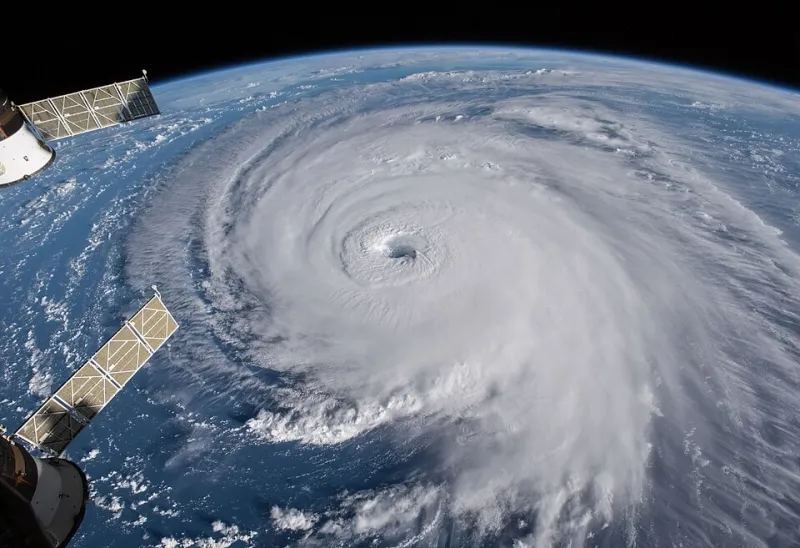
Photo: NASA/Goddard Space Flight Center, CC BY 2.0, via Wikimedia Commons
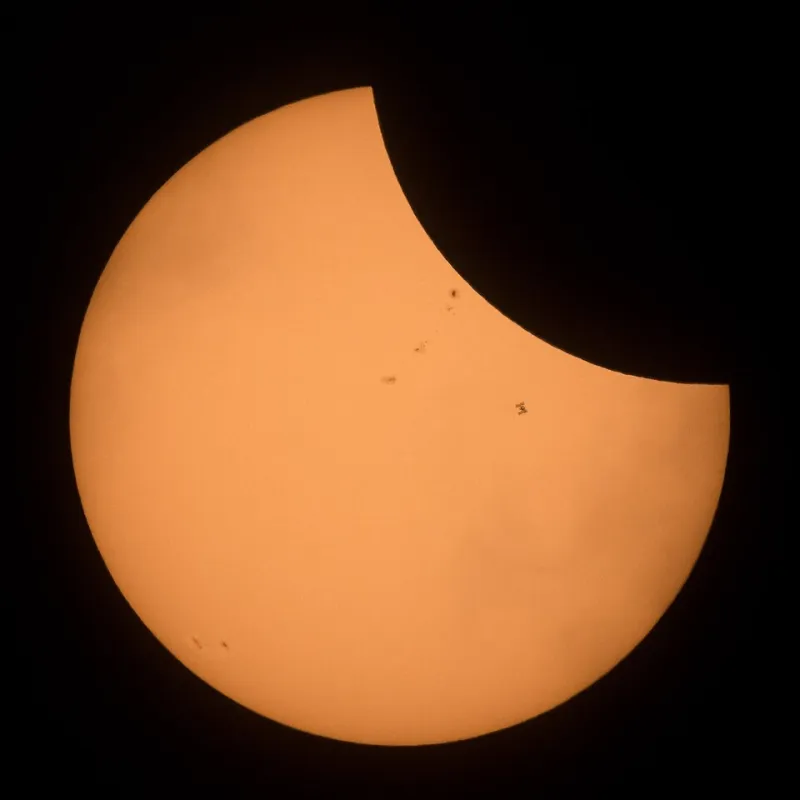
There's a moment every ISS watcher knows well. You're standing in your backyard, neck craned toward the southwest, and suddenly a bright, steady point of light slides silently across the sky. No blinking, no engine noise — just a human-made object the size of a football field, moving at 17,500 miles per hour, catching the sun's light while most of the world is already in shadow. It's genuinely one of the more humbling things you can witness with your own eyes.
But here's the part most guides skip over: that experience isn't equally available to everyone. Where you live in the United States has a real, measurable effect on how often you'll get a quality ISS pass, how high it'll climb in your sky, and how long you'll have to watch it before it disappears. Let's break that down by region.
Why Latitude Is the Whole Game
The ISS orbits at an inclination of 51.6 degrees relative to Earth's equator. That number is more than trivia — it's the ceiling and the floor of where the station can appear in your sky. For observers in the continental US, which spans roughly 25 to 49 degrees north latitude, the ISS is always theoretically visible. But "theoretically" does a lot of heavy lifting there.
The closer you are to the station's ground track, the higher it climbs overhead. High passes — those that reach 60, 70, even 80 degrees above the horizon — are dramatic, long-duration events. Low passes, skimming 10 to 20 degrees above the horizon, are brief, often partially blocked by trees or buildings, and much dimmer. Your latitude shapes which kind of passes you mostly get.
The Northern Tier: Frequent Passes, Sometimes Too Frequent to Track
States like Montana, Minnesota, Wisconsin, Michigan, and Maine sit in the 45–49 degree latitude range. These observers benefit from something genuinely special: during summer months, the ISS can appear in twilight skies multiple times in a single evening. Because nights are short and the station's orbit is inclined close to local latitude, you can sometimes catch two or even three consecutive passes within a couple of hours.
The trade-off? Summer nights in the far north are short and never fully dark, which means the station competes with lingering twilight. Winter brings long, dark nights — but also brutal cold and more cloud cover. The sweet spots for northern-tier observers are April–May and August–September, when darkness arrives at a reasonable hour and the skies tend to cooperate.
For tracking tools, observers in this zone should set their location carefully in any app or site they use. A pass that looks mediocre from Minneapolis might look spectacular from a dark-sky site just 60 miles north.
The Middle Belt: America's ISS Sweet Spot
If you live in the band running roughly from Kansas City to Charlotte — covering states like Missouri, Kentucky, Tennessee, Virginia, Kansas, and the Carolinas — you're sitting in what might be the most consistently rewarding zone for ISS observation in the country.
This latitude range (roughly 35–40 degrees north) gives you high-elevation passes several times per week during active viewing seasons, combined with evenings that get genuinely dark at reasonable hours year-round. Passes in this zone frequently climb past 60 degrees, and the station is visible for four to six minutes on the best nights.
Spring and fall are the prime seasons here. Clear skies are more common than in winter, and the ISS ground track aligns favorably for evening passes. Observers in this belt should be watching the western and southwestern horizon after local sunset — that's where most quality passes originate.
The South: Warm Nights, Lower Passes, Still Worth It
Florida, Louisiana, Texas, and other Deep South states deal with a different geometry. At latitudes between 25 and 32 degrees, the ISS passes tend to be lower on the horizon — often maxing out at 30 to 45 degrees rather than overhead. That's still plenty visible, but it does mean the passes are shorter and more susceptible to being blocked by terrain or urban haze.
The upside? You're not fighting ice and snow to stand outside in January. Winter months are genuinely productive for southern observers, with stable air and clear skies common across much of the Gulf Coast and Florida Peninsula. Texas observers also benefit from wide-open horizons across much of the state, which partially compensates for the lower pass angles.
For urban observers in places like Houston, Miami, or Atlanta, light pollution is a bigger enemy than latitude. The ISS is bright enough to cut through most city skies — it regularly hits magnitude -3 or brighter on good passes — but finding even a small patch of darker sky will dramatically improve the experience.
The West: Altitude, Terrain, and Timing
Western states present the most varied conditions of any region. Colorado, Utah, and Arizona observers often enjoy exceptional atmospheric clarity at elevation, which makes even modest passes look crisp and bright. The mountain west also benefits from low humidity, which reduces the atmospheric blurring that plagues coastal and midwestern observers.
California is its own story. Northern California observers near the Oregon border behave much like the northern-tier states. Southern California, from Los Angeles down to San Diego, is closer to the southern-tier geometry. The coastal marine layer is the main wildcard — it can wipe out an otherwise perfect pass with zero warning.
Pacific Northwest observers in Washington and Oregon get a mix of northern-tier pass frequencies and notoriously wet winters. March through October is the realistic window for consistent viewing, and even then, you're checking the forecast every single time.
How to Find Your Personal Viewing Calendar
No article can substitute for a real-time tracking resource, and that's where Sight Space Station comes in. By entering your exact location, you can pull up a customized pass schedule that accounts for your specific latitude, the current orbital position of the ISS, and local sunrise/sunset times that determine whether a pass will be visible or washed out in daylight.
A few things to look for when reviewing your upcoming passes:
- Maximum elevation: Anything above 40 degrees is a quality pass. Above 60 degrees is a great one.
- Duration: Longer passes give you more time to find the station and follow it.
- Direction of travel: Note where it rises and where it sets — this helps you position yourself in advance.
- Magnitude: Negative numbers mean brighter. A -3.5 pass is hard to miss even in a city.
One More Thing Worth Remembering
The ISS isn't stationary, and neither is its visibility window. The orbital period is roughly 92 minutes, but the geometry of which passes are visible from your location shifts day by day. A week of morning passes will eventually rotate into evening passes. Seasons change the equation further.
The observers who see the ISS most often aren't necessarily the ones in the best locations — they're the ones who check the schedule regularly and actually go outside. Your state might not be the geometric ideal, but every clear night is an opportunity. The station is up there either way.