Sky Watching by the Calendar: How Earth's Orbit Shapes Your Best Observation Nights All Year
Photo: SUHEJLO, CC BY 4.0, via Wikimedia Commons
Most people think of the night sky as something that just happens above them — a fixed backdrop that swaps out stars on a slow rotation. But here's the thing: the sky you see on any given night is a direct consequence of where Earth sits in its 365-day journey around the Sun. That position affects everything from which constellations are overhead to how bright a meteor shower burns to whether the ISS drifts into shadow before it crosses your meridian. Once you start thinking like an orbital mechanic instead of a casual stargazer, the whole year opens up like a schedule you can actually plan around.
This isn't about memorizing dates. It's about understanding why certain events cluster in certain seasons — and using that knowledge to never miss the good stuff again.
Why Your Latitude and the Calendar Are Inseparable
For observers in the continental United States, the geometry of Earth's axial tilt (23.5 degrees, if you want to impress someone at a party) creates dramatic swings in observing conditions. In summer, the Northern Hemisphere tilts toward the Sun, which means longer days, shorter nights, and a sky that doesn't fully darken until well after 9 p.m. in northern states. In winter, the tilt reverses: darkness comes early, temperatures drop, and the atmosphere tends to stabilize in ways that actually improve seeing conditions for telescopes.
The counterintuitive truth? Winter is genuinely better for a lot of serious observation work. Yes, you're standing outside in the cold, but you're rewarded with longer dark windows, less atmospheric turbulence from daytime heating, and some of the year's most dramatic constellations — Orion, Taurus, Gemini — riding high in the sky.
Summer, meanwhile, has its own advantages that are easy to overlook. The Milky Way core becomes visible from most of the US between June and September, arching overhead in a way that simply isn't accessible during winter months. If deep-sky targets like nebulae and star clusters are your thing, summer nights — even the shorter ones — deliver the goods.
Meteor Showers: The Geometry Behind the Glow
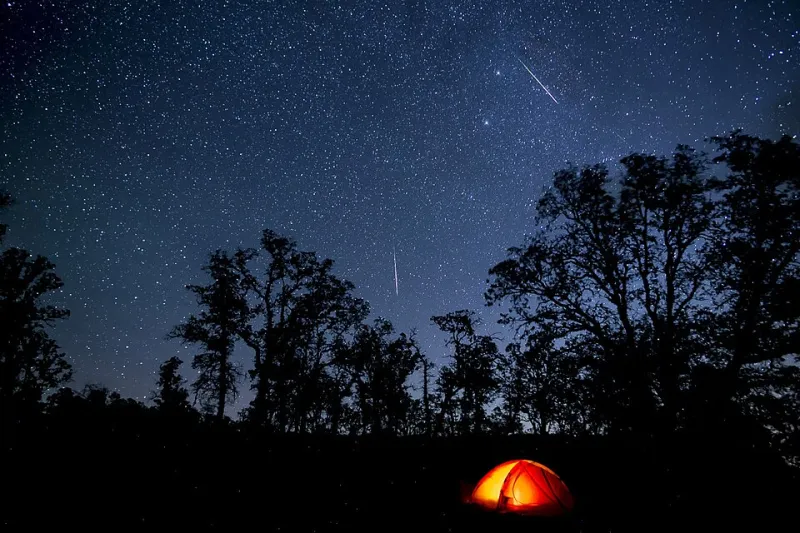
Meteor showers are one of the clearest examples of orbital timing at work. Every shower happens when Earth passes through a stream of debris left behind by a comet or, in some cases, an asteroid. The date of each shower is fixed relative to Earth's position in its orbit, not to any arbitrary calendar convention.
The Perseids in mid-August are the crowd favorite, and for good reason: warm nights, no need for heavy gear, and a radiant point that climbs high in the northeastern sky after midnight. Rates can hit 100 meteors per hour under ideal conditions. But the Perseids compete with shorter summer nights and, in some years, a bright Moon that washes out the fainter streaks.
The Geminids in mid-December are, by most astronomer accounts, the better shower — higher peak rates, slower and more colorful meteors, and a radiant that's well-placed for US observers all night long. The catch is obvious: December in most of the country means cold. But dress for it, and the Geminids will reward you in a way August rarely matches.
The Leonids (November) and Quadrantids (early January) round out the major annual shows, with the Quadrantids in particular being underrated because of its narrow peak window — sometimes just a few hours — that many observers sleep through entirely.
Pro tip: the single most important variable for any meteor shower isn't the shower itself — it's the Moon phase. A full Moon during a Perseid peak can cut your visible count by 70 percent. Check the lunar calendar before you commit to a late-night session.
Planetary Alignments and Oppositions: Patience Pays Off
Planets don't follow the same yearly rhythm as meteor showers. Their visibility windows shift across seasons over multi-year cycles, which is why Jupiter might dominate your autumn sky one year and be a morning object the next.
The key concept here is opposition — the moment when an outer planet (Mars, Jupiter, Saturn, etc.) sits directly opposite the Sun from Earth's perspective. At opposition, the planet rises at sunset, sets at sunrise, and appears at its largest and brightest for the year. For US observers, the season in which opposition falls matters enormously.
When Mars reaches opposition in summer, it rides relatively low in the southern sky for northern US observers, which means more atmospheric haze to peer through. A winter or autumn Mars opposition places the planet higher in the sky, sharpening the view through a telescope. This is why Mars oppositions aren't created equal — the ones that happen when Mars is also near perihelion (its closest point to the Sun) and positioned high in winter skies are genuinely rare events worth circling on a calendar years in advance.
Jupiter and Saturn tend to put on their best shows during late summer and autumn oppositions, when they're high enough in the sky to reward telescope users with steady, detailed views.
ISS Brightness and the Seasonal Factor
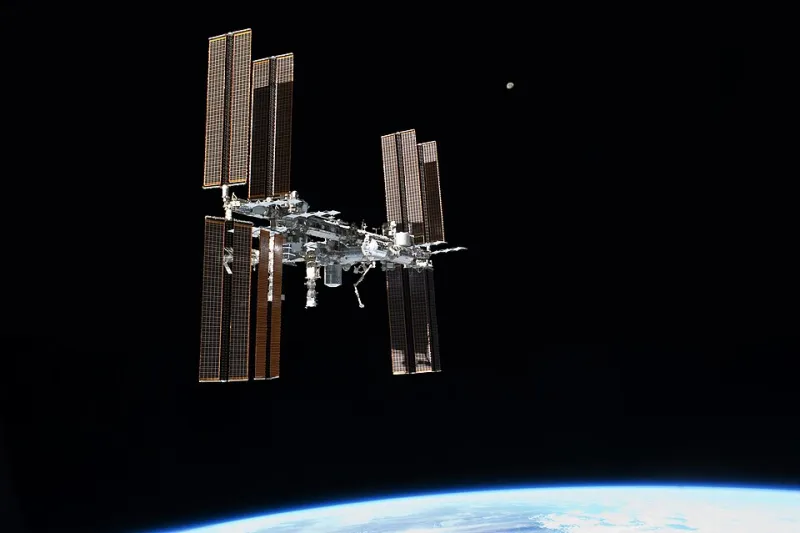
If you track the International Space Station — and if you're here, you probably do — you already know that its brightness varies from pass to pass. What you might not have connected yet is how Earth's seasonal tilt feeds directly into those brightness swings.
The ISS appears brightest when it's in sunlight and you're in twilight or darkness. During summer evenings at northern US latitudes, the Sun stays close to the horizon for longer after sunset, which extends the window in which the ISS catches direct sunlight during early-night passes. This creates what trackers sometimes call "golden hour" passes — those brilliant, slow-moving arcs across a still-glowing sky that look almost too good to be real.
In winter, early-night passes are more likely to occur when the Sun has dropped far enough below the horizon that the ISS enters Earth's shadow mid-pass, cutting the show short. However, winter also reduces the interference from twilight, so when you do get a clean pass, the contrast against a fully dark sky makes it pop.
The bottom line: summer evenings favor extended, bright ISS passes. Winter nights favor sharp contrast and longer dark windows for catching multiple passes in a single session.
Building Your Personal Cosmic Calendar
Here's a rough seasonal framework for US observers who want to stay ahead of the sky:
Winter (December–February): Prioritize the Geminids (early December), Quadrantids (early January), and opposition of any outer planets that fall in this window. Orion and the winter hexagon are at their peak. Atmospheric seeing is often excellent for lunar and planetary work.
Spring (March–May): Galaxy season begins. The Virgo Cluster and other deep-sky targets become accessible. Spring evenings are ideal for learning the sky before summer crowds the calendar.
Summer (June–August): Milky Way core viewing, Perseid meteor shower, and peak ISS evening pass brightness. Jupiter and Saturn often reach opposition in late summer. Nights are short but spectacular.
Autumn (September–November): A transitional goldmine. Outer planet oppositions continue, the Milky Way starts to fade from evening skies, and the Leonids close out the meteor shower season. Nights lengthen steadily, giving you more time without the brutal cold of winter.
The Takeaway: The Sky Rewards the Planner
Casual stargazing is always worth doing — stepping outside on any clear night and looking up is never a waste of time. But if you want to actually catch the best the sky has to offer, you need to think like Earth moves. Your planet is constantly changing your viewing angle, your darkness window, and your access to specific regions of the cosmos. Work with that motion instead of against it, and the difference in what you'll see over a single year is remarkable.
Mark the dates, check the Moon phases, dress for the weather, and get outside. The cosmic calendar doesn't wait.